Home › Igenics Review
Igenics Review: Does This Eye Health Supplement Really Work?
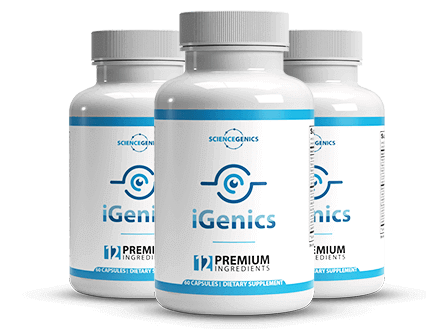
Our Igenics review looks at what is inside this daily eye health capsule, what the research says about each ingredient, what it costs, and where the marketing runs ahead of the evidence. In short: Igenics is built from ingredients with real eye-nutrition research behind them, but no published trial has tested Igenics itself, and some claims on its official sales page go far beyond the science. We score it 4.8 out of 5.
The 30-second answer
- Worth trying if: you want a daily eye-nutrition capsule, spend hours on screens or eat few leafy greens, and you are comfortable with limited proof.
- Skip it if: you expect it to restore eyesight, replace glasses, or treat macular degeneration, glaucoma or cataracts. No supplement does that.
- Price: $39 to $59 per 30-day bottle, with a 180-day money-back guarantee.
Disclosure: this page contains affiliate links. We may earn a commission if you buy through them, at no extra cost to you. It never changes our scores. Read the full disclosure.
In this Igenics review
- Quick verdict and scorecard
- Igenics at a glance
- How we reviewed Igenics
- What is Igenics?
- Ingredients and evidence
- How Igenics works
- Benefits to expect
- Side effects and safety
- Price, bonuses and refund policy
- Customer reviews
- Pros and cons
- Igenics vs other eye supplements
- Who should take it
- How to take Igenics
- Eye health habits
- Is Igenics legit or a scam?
- FAQ
- Final verdict
- Sources
- Disclosure
Igenics Review: Our Quick Verdict
Here is how Igenics scored in our review. Each category is scored from 1 to 5, and the overall score is a simple average.
| Category | Score | Why |
|---|---|---|
| Formula quality | 5 / 5 | Twelve ingredients, including lutein 20 mg, zeaxanthin 10 mg, bilberry 480 mg and saffron 20 mg. |
| Evidence for the finished product | 4.8 / 5 | We found no published trial of Igenics itself. Ingredient research is real but mixed. |
| Label transparency | 4.3 / 5 | Doses for ginkgo, vitamins, zinc and copper were not listed on the pages we reviewed. |
| Safety and quality claims | 4.5 / 5 | A GMP facility and third-party testing are claimed, but we could not find a public lab report. |
| Value for money | 4.5 / 5 | About $1.30 to $1.97 per day, which is mid-priced to premium for an eye supplement. |
| Marketing honesty | 4.5 / 5 | The official sales page makes miracle-style claims we could not verify. |
| Refund policy | 4.5 / 5 | 180-day money-back guarantee, and you do not need to return the bottles. |
| Overall | 4.8 / 5 | A promising formula with a strong ingredient profile, but marketing claims outpace the available evidence. |
Igenics at a Glance
| Detail | Igenics |
|---|---|
| Product | Igenics (also written iGenics), a daily eye health supplement |
| Maker (per the sales page) | Science Genics, produced in the USA |
| Serving | Two capsules per day; 60 capsules per bottle (30 days) |
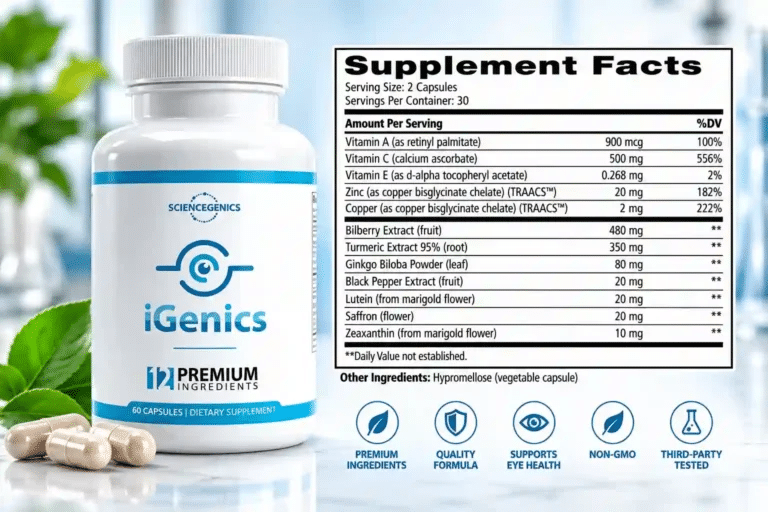
| Key ingredients | Bilberry 480 mg, lutein 20 mg, zeaxanthin 10 mg, saffron 20 mg, turmeric 350 mg, black pepper extract 20 mg, ginkgo biloba, vitamins A, C and E, zinc, copper |
| Form | Vegetable capsules; described as vegan-friendly and non-GMO |
| Price (October 2026) | $39 to $59 per bottle depending on the package |
| Guarantee | 180-day money-back guarantee |
| Where to buy | Official website only, according to the manufacturer |
| Our Igenics review score | 4.8 out of 5 |
How We Reviewed Igenics
A useful supplement review should say how it was done. Here is our process for this Igenics review:
- Label and sales-page analysis. We read the official product pages and compared the listed ingredients and doses with published research.
- Ingredient research check. We looked up each key ingredient in NIH resources, Cochrane reviews and PubMed, and noted where evidence is strong, weak or missing.
- Price and policy check. We recorded package prices, shipping, bonuses and the refund policy as listed on October 9, 2026.
- Third-party commentary. We read independent forum comments and other online Igenics reviews, treating affiliate-style content with caution.
We also earn a commission if you buy through our links. That is why we show our scoring openly and cite our sources at the end.
What Is Igenics?
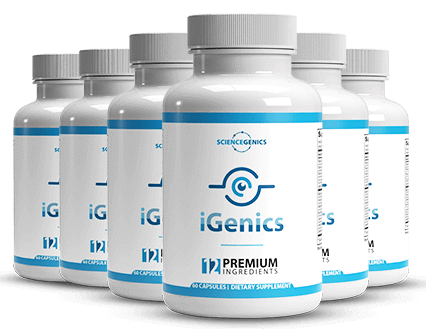
Igenics (sometimes written iGenics) is a dietary supplement sold in capsule form for eye and vision support. The recommended serving is two capsules a day, and each bottle holds 60 capsules, which is a 30-day supply. The capsules are described as vegetarian-friendly and made without animal by-products.
Who Makes Igenics?
The official sales page credits a company called Science Genics, with production in a US facility that follows good manufacturing practice (GMP). It presents the formula through a physician named Dr. Charles Williams. We could not independently verify that profile, so we treat the story as marketing rather than evidence.
What Igenics Claims to Do
The brand positions Igenics as support for visual comfort, night vision, retinal wellness and everyday eye health, especially for people who spend long hours on screens. The more cautious wording appears on the main Igenics information page, which says it complements, not replaces, medical care. The official sales page goes much further, which we cover in the legit or scam section.

Igenics Ingredients: What Is Inside and Does the Science Hold Up?
The ingredient list is where Igenics is strongest, and it is the most important part of any Igenics review. Below is the formula as described on the official sales page, with our read of the evidence for each part. The ratings describe ingredient research in general, not a trial of Igenics itself.
| Ingredient | Amount listed | Evidence | Our read |
|---|---|---|---|
| Lutein | 20 mg | Moderate | Core AREDS2 nutrient; best evidence in people with AMD or low dietary intake |
| Zeaxanthin | 10 mg | Moderate | Studied alongside lutein; dose is above the 2 mg tested in AREDS2 |
| Bilberry extract | 480 mg | Weak to mixed | Popular for night vision and eye strain, but rigorous trials are inconsistent |
| Ginkgo biloba | Not listed | Limited | Small retrospective glaucoma studies; the dose matters and is unknown here |
| Saffron | 20 mg | Limited | Small trials in early AMD; promising but not conclusive |
| Vitamin C, vitamin E, zinc, copper | Not listed | Moderate in AMD | AREDS-type formulas probably slow progression in people who already have AMD |
| Vitamin A | Not listed | Limited | Added as extra support; excess vitamin A needs care in pregnancy |
| Turmeric extract | 350 mg | Limited | Little eye-specific human evidence; the sales page says it also helps manufacturing |
| Black pepper extract | 20 mg | Absorption aid | May raise absorption of other compounds and some medicines |
Lutein and Zeaxanthin: The Strongest Part of the Formula
What the research says
Lutein and zeaxanthin are carotenoids that collect in the macula, the central part of the retina, and supplements reliably raise macular pigment. In the NIH-sponsored AREDS2 trial, adding 10 mg of lutein and 2 mg of zeaxanthin to the original formula showed no overall extra benefit. However, people with low dietary intake of these carotenoids were about 25 percent less likely to progress to advanced AMD, and the pair proved a safer swap for beta-carotene.
What to watch
Igenics lists 20 mg of lutein and 10 mg of zeaxanthin, higher than the doses tested in AREDS2. More is not automatically better. The AREDS2 participants were adults aged 50 to 85 with intermediate or advanced AMD, so the results do not directly apply to healthy eyes. A Cochrane review on preventing AMD in healthy people found no good evidence that supplements such as lutein and zeaxanthin do so.
Bilberry: Popular, but the Evidence Is Mixed
What the research says
The famous story about World War II pilots eating bilberry jam is repeated everywhere, yet a 2004 systematic review of placebo-controlled trials found that the idea that bilberry improves normal night vision is not supported by rigorous studies. A 2022 review concluded that results for vision disorders are contradictory and that some claims have been repeated for decades without fact-checking. Some smaller human trials, mostly from Japan, report less eye fatigue.
What to watch
Igenics lists 480 mg of bilberry extract per serving, which is a high amount. The anthocyanin content, which is the active part, was not stated on the pages we reviewed.
Ginkgo Biloba: Interesting, but the Dose Is Not Disclosed
The sales page leans on a 2012 Journal of Medicinal Food study of 332 people with normal tension glaucoma. It was a retrospective chart review in which patients took either ginkgo extract or bilberry anthocyanins and were compared with untreated patients, not a trial of the two combined. A 2013 retrospective study of 42 patients using 80 mg of ginkgo extract twice daily also suggested slower visual field loss. These are hints, not proof, and glaucoma needs medical treatment. Igenics does not list its ginkgo dose on the pages we reviewed.
Saffron: Promising Early Research
Saffron has been tested in a handful of small human trials in early AMD, with encouraging but preliminary results. Twenty milligrams per day is the dose used in several of those small trials, but larger independent studies are still needed.
Vitamins and Minerals: The AREDS-Style Layer
Igenics includes vitamins C, E and A plus zinc and copper, the same family of nutrients used in the original AREDS formula. A 2023 Cochrane review found moderate-certainty evidence that this kind of formula probably slows progression to late AMD in people who already have the condition. The catch is that Igenics does not list the amounts on the pages we reviewed, so we cannot confirm it matches the tested doses. For reference, AREDS2 used 500 mg of vitamin C, 400 IU of vitamin E, zinc and 2 mg of copper.
Turmeric and Black Pepper Extract
Turmeric (curcumin) is widely studied for inflammation, but eye-specific human evidence is limited, and much of the research cited in marketing for this ingredient comes from laboratory or animal work. Black pepper extract is included to boost absorption. That can be useful, but it can also change how the body handles some medicines, so a pharmacist check is wise if you take prescription drugs.
How Does Igenics Work?
The logic behind Igenics is straightforward. The retina is packed with light-sensitive cells and works under constant oxidative stress. Lutein and zeaxanthin collect in the macula and filter blue light, while vitamins C and E and plant compounds such as anthocyanins act as antioxidants. The idea is to give the eye more of the nutrients it uses. That is plausible nutrition science, but it is support, not a cure.
Where the Marketing Goes Too Far
The official sales page builds its pitch on a term it calls CPE, a chronic proinflammatory environment, which it says causes most vision loss and stops your eyes from renewing themselves every seven days. We could not find CPE used as a recognized diagnosis in ophthalmology guidance, and we found no support for the idea that your eyes rebuild themselves every week. The page also promises results within 7 days and says the formula can make glasses and LASIK obsolete. No supplement research supports those statements.
Our takeaway
Judge Igenics on its ingredients, not its story. The nutritional logic is reasonable; the miracle language is not.
Igenics Benefits: What You Can Realistically Expect
The honest answer is that likely benefits are modest and slow, and some people notice nothing. Here is how we sort the claims.
Benefits With Reasonable Ingredient Support
- Macular pigment support. Lutein and zeaxanthin supplements reliably raise macular pigment levels, especially if your diet is low in leafy greens.
- Possible help with screen-related eye fatigue. Some small bilberry trials report less eye strain, though results are inconsistent.
- General antioxidant intake. Vitamins C and E, zinc and copper contribute to the nutrients your eyes use.
- Convenience. One simple daily habit instead of juggling several supplements.
Claims We Cannot Support
- Restoring or resurrecting lost eyesight
- Making glasses, contacts or LASIK unnecessary
- Treating or reversing macular degeneration, glaucoma or cataracts
- Visible results in 7 days
How Long Until You Might Notice Something?
Plan on at least 60 to 90 days of consistent use. Carotenoids build up slowly, and any subtle change, such as less end-of-day eye tiredness, is easy to confuse with better sleep or screen habits. Note how your eyes feel before you start, and keep your regular eye exams.
Igenics Side Effects and Safety
The manufacturer does not publish clinical side-effect data for Igenics itself, so safety questions come down to its ingredients. Most healthy adults tolerate these ingredients well, but a few cautions matter.
Possible Side Effects
- Stomach upset, nausea or loose stools, more likely on an empty stomach and with zinc
- Headache or dizziness, mainly linked to ginkgo
- Allergic reactions to any plant ingredient
- Harmless yellowing of the skin (carotenodermia) with very high carotenoid intake, though this is uncommon
Medicine and Health-Condition Interactions
Check with a doctor or pharmacist first if any of the following apply to you:
- Blood thinners or antiplatelet medicines. Ginkgo and turmeric may increase bleeding risk, and ginkgo is usually stopped before surgery.
- Prescription medicines in general. Black pepper extract can change how some drugs are absorbed and processed.
- Diabetes medicines. Bilberry and turmeric may affect blood sugar.
- Other supplements with zinc or vitamin A. Combined intake could exceed safe upper limits.
Who Should Not Start Without Medical Advice
Pregnant or breastfeeding women, anyone under 18, people with an existing eye disease, and anyone with upcoming surgery should speak to a doctor before using Igenics.
Igenics Price, Bonuses and Refund Policy
These are the packages listed on the official order page when we checked on October 9, 2026. Prices and promotions can change, so confirm everything at checkout.
| Package | Price per bottle | Total | Cost per day | Shipping and bonuses |
|---|---|---|---|---|
| 1 bottle (30 days) | $59 | $59 | About $1.97 | $9.99 shipping, no bonuses |
| 3 bottles (90 days) | $49 | $147 | About $1.63 | 2 free bonuses; the page shows both free shipping and a $9.99 fee, so confirm at checkout |
| 6 bottles (180 days) | $39 | $234 | About $1.30 | Free shipping, 3 free bonuses including a bottle of Intelligen (a brain supplement) and 2 e-books |
Is Igenics Worth the Price?
At roughly $1.30 to $1.97 per day, Igenics costs more than a basic lutein capsule and sits in the mid-to-premium range. You are paying for a 12-ingredient blend with higher lutein, zeaxanthin and bilberry amounts. Whether that premium helps depends on whether the extra ingredients add benefit, which the research does not clearly show. The $149 retail price crossed out on the sales page is a promotional anchor, so judge the offer by the real $39 to $59 price.
Refund Policy
The refund policy promises a 180-day money-back guarantee with no need to return the bottles. One passage on the sales page mentions 60 days instead, so save a screenshot of the terms and your order confirmation, and contact customer service early if you are not satisfied.
Where to Buy Igenics
The manufacturer says it sells Igenics only through its official website, not on Amazon or in stores. Avoid third-party sellers and look-alike sites, which may sell counterfeits and may not honor the guarantee.
Igenics Customer Reviews: What Users Say and How Far to Trust Them
Checking independent feedback for an Igenics review is harder than it should be. The reviews on the official pages are testimonials chosen by the seller, and the sales page cites a 4.92 out of 5 average from more than 47,000 reviews that we could not verify. Customer counts also vary across the same page, from about 22,000 to almost 48,000 users, which weakens trust in the figures.
Common Positive Themes
- Easy to remember: two capsules a day fits a morning routine
- Capsules are easier than liquids or drops
- Ingredients are clearly listed on the label
- Some people describe their eyes feeling less tired at the end of the day
Common Complaints and Skeptical Views
- Results are gradual, subtle or not noticeable, so expectations matter
- The price is higher than basic eye vitamins
- Skeptics argue that many eye supplements are ordinary vitamins in expensive packaging
- Many online Igenics reviews are affiliate content, so treat glowing, copy-and-paste style reviews carefully
Context From Independent Research
A study reported by the American Academy of Ophthalmology looked at 11 popular eye vitamins and found that 7 did not follow proven formulas and that all 11 carried claims lacking scientific support. That does not single out Igenics, but it is a good reminder to read the label, not the slogan.
Igenics Review: Pros and Cons
Pros
- Lutein (20 mg) and zeaxanthin (10 mg) above the doses tested in AREDS2
- Broad 12-ingredient blend that also includes bilberry, saffron and ginkgo
- Simple routine: two vegetarian capsules a day
- Stimulant-free formula
- 180-day money-back guarantee
- Made in the USA in a facility described as GMP compliant
Cons
- No published clinical trial of the finished product
- Doses for ginkgo, vitamins, zinc and copper not listed on pages we reviewed
- Exaggerated, unverifiable claims on the official sales page
- Mid-to-premium price compared with basic eye vitamins
- Sold only through the official site
- Ginkgo, turmeric and black pepper extract can interact with some medicines
Igenics vs Other Eye Supplements
| Feature | Igenics | AREDS2-style formula | Basic lutein and zeaxanthin | General multivitamin |
|---|---|---|---|---|
| Aim | Broad eye-nutrition blend | Slowing intermediate AMD, doctor-guided | Macular pigment support | General nutrition |
| Lutein / zeaxanthin | 20 mg / 10 mg | 10 mg / 2 mg | Varies | Usually low |
| Vitamins C, E, zinc, copper | Included, amounts not listed | Specific tested doses | No | Low doses |
| Herbal extracts | Bilberry, ginkgo, saffron, turmeric | None | None | Rare |
| Research base | Ingredient-level, mixed | Large NIH-sponsored trials | Ingredient-level, moderate | Not eye-specific |
| Best for | Adults wanting a broad daily blend | People with AMD, as advised by an eye doctor | Simple, targeted support | Covering general nutrient gaps |
Which Should You Choose?
If you have been diagnosed with intermediate AMD, ask your eye doctor about an AREDS2-formula supplement, which has the strongest clinical backing. If your eyes are healthy and you want broader support, Igenics is a reasonable option. A basic lutein and zeaxanthin supplement combined with a diet rich in leafy greens is a cheaper alternative worth considering too.
Who Should Take Igenics, and Who Should Skip It?
Igenics May Suit You If
- You are an adult who spends many hours on screens
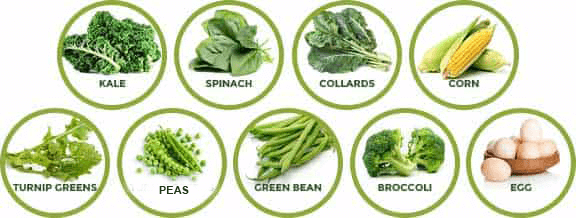
- Your diet is low in leafy greens, eggs and colorful vegetables
- You prefer one blended capsule to several separate supplements
- You are comfortable with limited evidence and want the safety net of a refund policy
Skip Igenics or Ask Your Doctor First If
- You have diagnosed AMD, glaucoma, cataracts or diabetic eye disease
- You take blood thinners or other prescription medicines
- You are pregnant, breastfeeding or under 18
- You are looking for a miracle cure or a replacement for glasses or surgery
How to Take Igenics: Dosage and Tips
- Take two capsules daily with a full glass of water, as the directions say.
- Pair them with a meal that contains some healthy fat, such as eggs, nuts or olive oil, since lutein and zeaxanthin are fat-soluble.
- Stay consistent. Pick a fixed time, such as breakfast, so it becomes a habit.
- Do not double up. If you miss a dose, resume your normal serving the next day.
- Store it properly in a cool, dry place away from direct sunlight and out of the reach of children.
- Review after 60 to 90 days and decide whether to continue, ideally after an eye exam.
Eye Health Habits That Matter as Much as Any Supplement
No capsule makes up for poor eye habits. These basics do more for most people than any formula, and they pair well with Igenics if you choose to use it.
- Follow the 20-20-20 rule: every 20 minutes, look at something 20 feet away for 20 seconds.
- Wear UV-blocking sunglasses outdoors.
- Do not smoke. Smoking is a major risk factor for AMD.
- Eat leafy greens, eggs, colorful vegetables and oily fish for natural lutein, zeaxanthin and omega-3s.
- Book regular comprehensive eye exams, especially after 40 or with a family history of eye disease.
- Blink often and stay hydrated during long screen sessions.
For more everyday ideas, see the Igenics eye health guide.
Is Igenics Legit or a Scam?
Our answer: Igenics appears to be a real, purchasable supplement rather than a fake product, but its sales marketing uses exaggerated and unverifiable claims. That combination calls for caution, not panic.
Signs Igenics Is Legitimate
- A named ingredient list, with amounts given for several key ingredients
- A clear 180-day refund policy and stated US customer service
- A claimed GMP facility and third-party batch testing
- FAQ and footer disclaimers that say it is not intended to treat disease
Red Flags We Noticed
- Miracle language such as restoring vision and new eyes in 7 days
- Research from major universities cited in ways we could not verify as described
- A physician profile we could not independently confirm
- Claims that the eye care industry is trying to shut the company down
- Urgency tactics such as limited offers for the first 50 customers
- Inconsistent figures for customer numbers, shipping and the refund period
- Wording that calls the facility FDA approved, which is not how the FDA works
How to Protect Yourself
- Buy only through the official website
- Save the refund terms and your order confirmation
- Pay by credit card for extra purchase protection
- Never stop prescribed eye treatment because of a supplement
- Contact customer service early if you are unhappy, not at day 179
Igenics FAQ: Your Questions Answered
Does Igenics really work?
Igenics contains ingredients with genuine eye-nutrition research, especially lutein, zeaxanthin and AREDS-style vitamins and minerals. However, we found no published trial of Igenics itself, and no supplement can restore lost vision or cure eye disease. Expect modest nutritional support at best, and judge it over at least 60 to 90 days.
What ingredients are in Igenics?
According to the official sales page, Igenics contains ginkgo biloba, bilberry extract (480 mg), saffron (20 mg), lutein (20 mg), zeaxanthin (10 mg), vitamins A, C and E, zinc, copper, turmeric extract (350 mg) and black pepper extract (20 mg). Doses for ginkgo, the vitamins, zinc and copper were not listed on the pages we reviewed, so check the supplement facts panel before buying.
How much does Igenics cost?
As listed on the official page on October 9, 2026, one bottle costs $59 plus $9.99 shipping, three bottles cost $49 each, and six bottles cost $39 each with free shipping and bonuses. Prices and promotions can change, so confirm at checkout.
Does Igenics have side effects?
The manufacturer does not publish side-effect data for the finished product. Ingredients such as ginkgo, turmeric and black pepper extract can occasionally cause stomach upset, headache or dizziness, and some can interact with blood thinners and other medicines. Talk to your doctor or pharmacist before starting.
Can Igenics cure macular degeneration, glaucoma or cataracts?
No. Igenics is a dietary supplement, not a medicine. The NIH-sponsored AREDS research applies to specific vitamin and mineral formulas in people with intermediate or advanced macular degeneration, under an eye doctor’s guidance. Glaucoma and cataracts need medical care.
How long does Igenics take to work?
Nutrients such as lutein and zeaxanthin build up in the retina gradually, so most ingredient research runs for months rather than days. The manufacturer suggests at least 30 days; we suggest judging it after 60 to 90 days alongside a regular eye exam.
How do I take Igenics?
The directions are two capsules per day with water. Taking them with a meal that contains some fat may help absorb the fat-soluble carotenoids. If you miss a dose, skip it rather than doubling up the next day.
Is Igenics FDA approved?
No. The FDA does not approve dietary supplements for safety or effectiveness before they are sold. The sales page describes the manufacturing facility as FDA-registered, and one passage says FDA approved, but a facility status is not the same as the product being approved.
Where can I buy Igenics?
The manufacturer says Igenics is sold only through its official website, not on Amazon or in stores. Be wary of marketplace sellers or look-alike sites, because they may sell counterfeits and may not honor the 180-day guarantee.
Is there a money-back guarantee?
Yes. The official refund policy offers a 180-day money-back guarantee, and you do not need to return the bottles. One passage of the sales page mentions 60 days, so confirm the terms in writing before ordering and keep your order confirmation.
Final Verdict: Is Igenics Worth Buying?
Our Igenics review lands at 4.8 out of 5. The formula is thoughtful, with real lutein and zeaxanthin doses, a high bilberry amount and an AREDS-style vitamin layer. What holds it back is the lack of any published trial on the finished product, several undisclosed doses and a sales page that promises far more than the research can back.
Sources and Further Reading
- National Eye Institute: NIH study provides clarity on supplements for protection against blinding eye disease (AREDS2)
- NCCIH: Dietary supplements for eye conditions, what the science says
- Cochrane Review: Antioxidant vitamin and mineral supplements for slowing the progression of AMD
- Cochrane Review: Antioxidant vitamin and mineral supplements for preventing AMD
- PubMed: Bilberry anthocyanosides for night vision, a systematic review of placebo-controlled trials (2004)
- PubMed: Bilberries, a review of bioactive constituents and clinical research (2022)
- Journal of Medicinal Food: Ginkgo biloba extract and bilberry anthocyanins in normal tension glaucoma (2012)
- PubMed: Effect of Ginkgo biloba extract on visual field progression in normal tension glaucoma (2013)
- Ophthalmology Web: Top-selling eye vitamins found not to match scientific evidence
Affiliate Disclosure and Medical Disclaimer
Affiliate disclosure. Some links on this page are affiliate links. If you buy through them, we may earn a commission at no additional cost to you. Our opinions and scores are our own and are not influenced by commissions.
Medical disclaimer. This Igenics review is for general information only and is not medical advice. The statements about Igenics have not been evaluated by the FDA, and the product is not intended to diagnose, treat, cure or prevent any disease. Talk to a licensed healthcare professional before starting any supplement, especially if you are pregnant, breastfeeding, take medicines or have an eye condition. Results vary from person to person.
Read our full disclaimer, privacy policy and terms and conditions.